
Landscape Lighting Secrets Blog
With over 14 years of experience in the landscape lighting industry, Ryan Lee reveals the secrets behind his success growing and exiting a multi million dollar landscape lighting company.
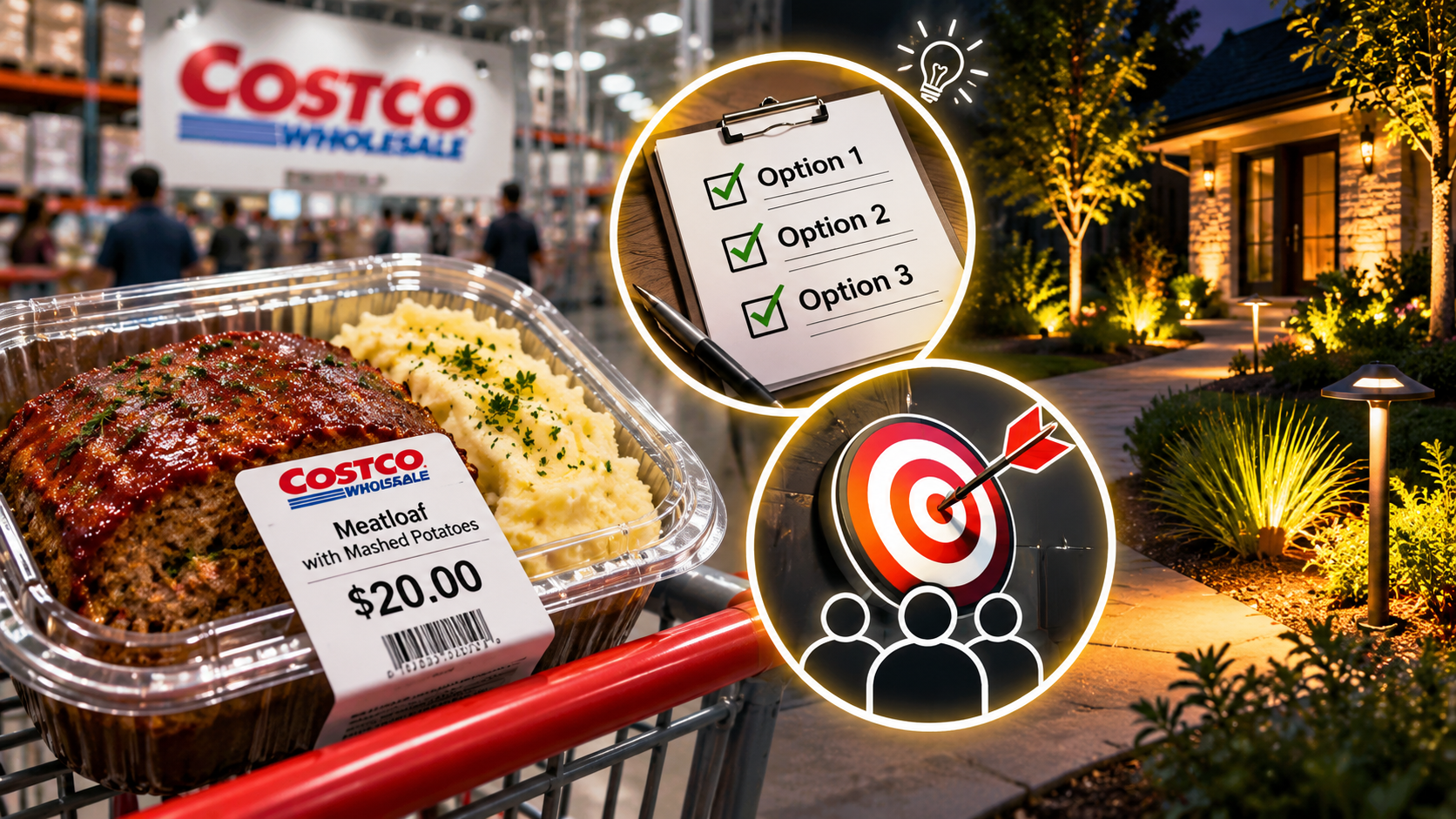
The $20 Meatloaf Lesson: Give Customers Options and Sell to the Right People
The $20 Meatloaf Lesson: Give Customers Options and Sell to the Right People
Sometimes, the best business lessons come from the most unexpected places—even a trip to Costco.
I recently went to Costco with my family. If you know me, you know I'm not exactly a fan of going there, especially when it's crowded. My son Max even looked at me like I had lost my mind when I said I was coming along.
But while walking through the store, I spotted something interesting: a $20 prepared meatloaf with mashed potatoes.
At first, I thought it was a pretty good deal. Sure, I could buy the ingredients and make it myself for less than half the price. But that's not really what I would be paying for.
I'm not paying $20 for ground beef and potatoes. I'm paying $20 to NOT have to make dinner.
No grocery shopping, no preparation, no cooking, and less cleanup. Just heat it up, feed the family, and move on with the evening.
That simple purchase reminded me of two important lessons every lighting contractor should understand.
Lesson #1: Give Your Customers Options
Some nights, I enjoy cooking. Other nights, I would rather spend my money to save time.
Same person. Same bank account. Different circumstances.
Your customers are no different.
One homeowner might want to illuminate only the front of their house. Another might want a complete property transformation, including the front yard, backyard, trees, and pathways. Someone else might prefer to start with a smaller project and expand later.
If you're only offering one option, you're probably leaving money on the table.
Give your customers three clear options to consider.
Don't assume you know what they can afford. Don't assume you know what they want. And don't limit their choices based on what you would personally spend.
Your role is to be the expert. Guide homeowners through the process, explain the value of each option, and help them choose the solution that works best for their needs and budget.
When customers have options, they can make a decision based on what matters most to them.
Lesson #2: Stop Trying to Sell Meatloaf to People Who Love Cooking
This might be the bigger lesson.
Imagine trying to sell a $20 prepared meatloaf to someone who absolutely loves cooking from scratch. They have their grandmother's recipe, already have all the ingredients, and genuinely enjoy preparing the meal.
You could spend hours explaining why your meatloaf is worth $20. But chances are, they aren't interested.
Now consider a busy parent who has just finished a 10-hour workday, picked up the kids, and has only 20 minutes to get dinner on the table.
That same $20 meatloaf suddenly looks like a great deal.
The product didn't change. The price didn't change. The person changed.
This is exactly what happens in the lighting industry.
I hear contractors say things like:
"People won't pay $600 per light."
"Nobody in my market can afford that."
"Facebook ads don't work."
"Everyone just wants the cheapest price."
But is that really true?
Or are you trying to sell a premium lighting experience to people who don't value a premium lighting experience?
There are homeowners who want someone else to handle everything. They want a professional design, quality installation, reliable customer service, and a team they can trust when something goes wrong.
They don't want to spend their weekends digging trenches, figuring out transformers, or troubleshooting lighting systems.
They want to come home, flip a switch, and enjoy their beautiful property.
And they're willing to pay for that experience.
Your knowledge has value. Your time has value. Your team, systems, and customer service all contribute to the value you provide.
But if you're consistently marketing to the wrong audience, you'll hear enough rejection that you may eventually start believing your prices are too high.
That's dangerous.
You might start lowering your prices, sacrificing your profit margins, and making it even harder to build the business you actually want.
Remember:
Your willingness to do something yourself does NOT determine what someone else is willing to pay to have it done for them.
Find the Right Customers for Your Lighting Business
You don't need to convince everyone that your services are worth the price. You need to reach homeowners who already understand and appreciate the value of what you offer.
Start by asking yourself two important questions:
1. Am I giving my customers enough options to choose what's right for them?
Review your proposals and service packages. Are you giving homeowners different levels of service and investment? Can they choose a smaller project, a more comprehensive design, or a phased installation?
2. Am I marketing to people who actually value what I'm selling?
Think about your ideal customer. Are you reaching homeowners who prioritize convenience, professional workmanship, beautiful results, and dependable service?
If the answer to either question is no, it's time to make some adjustments.
The good news is that both are things you can control.
You can improve your proposals, create better service options, refine your messaging, and focus your marketing on the customers most likely to appreciate your work.
Stop Selling Price. Start Communicating Value.
The goal isn't to convince every homeowner to spend more money. It's to help the right customers understand what they're getting when they hire your company.
A professional outdoor lighting installation is more than a collection of fixtures and wires. It's the design, expertise, installation, convenience, and ongoing support that come with the complete experience.
When you communicate that value effectively and present options that meet different customer needs, you give homeowners a better reason to choose your business.
So, the next time someone questions your pricing, don't immediately assume your services are too expensive.
Take a closer look at who you're selling to and how you're communicating your value.
Stop trying to convince everyone that your prices are worth it. Start finding the people who already value what you do—and give them a reason to choose you.
Who knew a trip to Costco could turn into a business lesson?
Keep Moving Forward!
— Ryan Lee
# lighting business, lighting contractors, outdoor lighting business, landscape lighting, pricing strategy, customer value, target market, premium services, customer options, upselling, business growth, marketing strategy #

© Landscape Lighting Secrets. All rights reserved.